Fund programmes you can defend. Show impact you can prove.
For Section 135 teams that need one place to design programmes, review NGO partners, release money against milestones, and keep Board-ready evidence of what changed.

Design
Schedule VII–mapped programme briefs
Diligence
40-point partner review before MoU
Funding
Milestone-gated releases
Impact
Evidence tied to every tranche
The problem
CSR runs on spreadsheets. Credibility does not.
Three gaps show up when a Committee, Board, or assessor asks what the money achieved.
Built for the 2026 rules
Your deadlines, mapped
Pick your profile. See what applies and what the platform does about it.
5 of 7 apply — tap any card
Approve the annual action plan
Project-wise Schedule VII mapping, approved before the financial year starts.
In Sahaay
Briefs carry Schedule VII mapping and budget bands from day one.
Not a donation catalogue. Credible programme delivery.
Giving marketplaces
- Browse NGOs and send a gift
- Receipts for donors
- Impact claimed in a PDF later
- Partner checked once at onboarding
- Reporting rebuilt at year-end
Sahaay
- Programme design tied to Schedule VII
- Diligence before any corporate funding
- Money released against verified milestones
- Partner compliance tracked through the year
- Impact evidence ready for Committee and CSR-2
Three jobs. One credible record.
Design the programme. Control the money. Keep impact evidence current.
Design
Describe the outcome. Get a programme plan mapped to Schedule VII, with baseline indicators you can edit.
Drafts speed the work. Your Committee still approves.
Fund
Partner review, milestone plan, and role-based sign-off before any rupee moves.
Every approval logged. Every tranche tied to evidence.
Prove
Field evidence collected as work happens — so Board packs and assessments show what changed, not only what was spent.
You keep the trail. Independent agencies still verify.
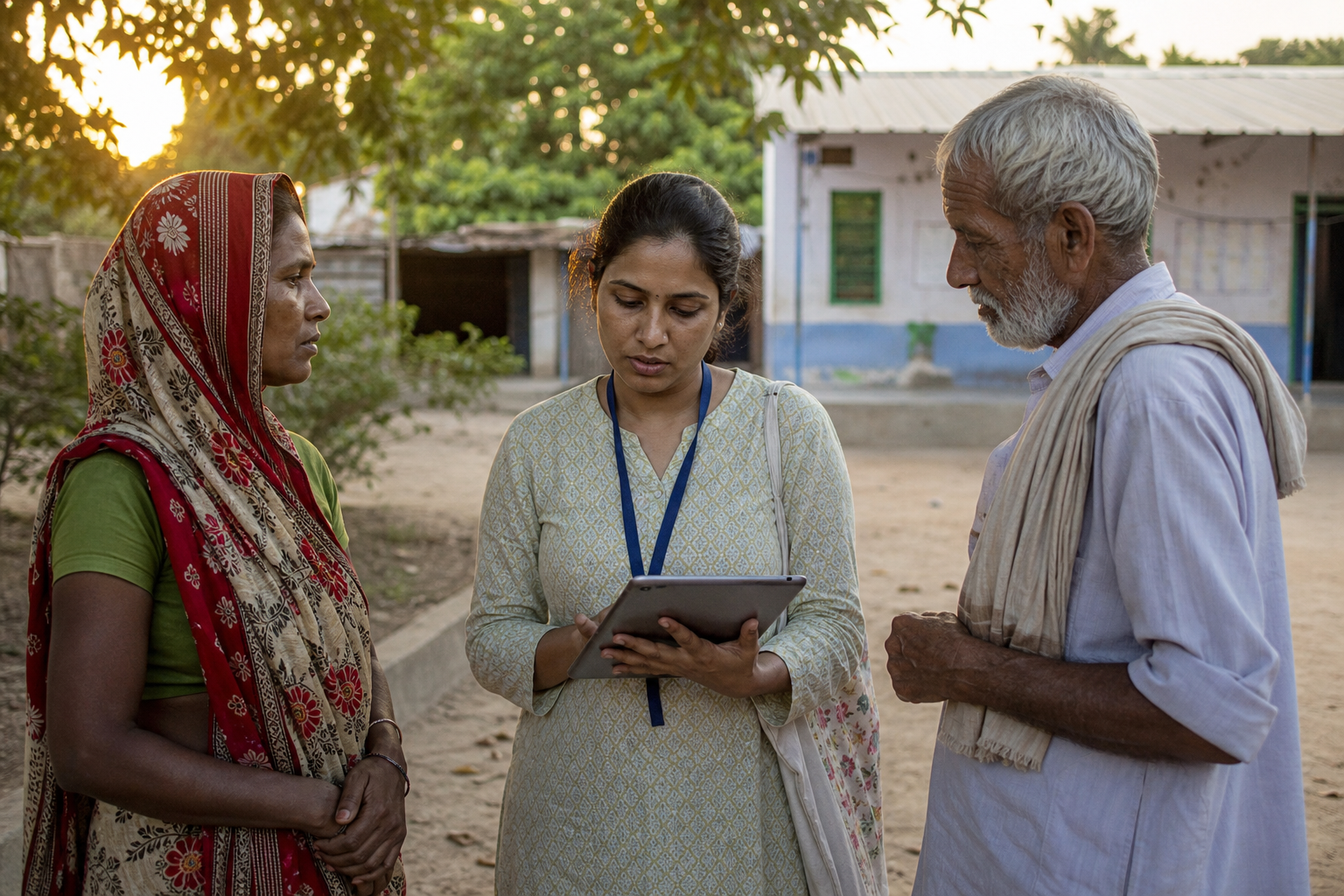
Assessment-ready
Keep evidence while the programme runs
Independent assessments take longest when the record is rebuilt after the fact. Sahaay dates field evidence as work happens so assessors verify — they do not start from email.
- Baseline set at design, not after completion
- Field data structured and dated as it arrives
- ₹1 crore assessment triggers flagged early
- Assessor verifies a complete file
Five stages, one trail
Each step feeds the next — so impact is not reconstructed in March.
Plan
FY budget, themes, Schedule VII alignment
Design
Programme brief → CSR Committee review
Vet
40-point NGO review before MoU
Deliver
Milestone tracking & staged payments
Report
Quarterly review, CSR-2, assessment evidence
What teams get back
Control for finance. Confidence for the Committee. A trail for impact.
Common questions
How is this different from a CSR marketplace?
A marketplace helps you find NGOs. Sahaay covers what comes next — programme design, diligence, staged funding, and filing-ready records.
We use spreadsheets today. Why change?
Spreadsheets work until someone asks you to reconstruct an 18-month-old decision. Sahaay keeps a dated trail of who approved what, and on what evidence.
Does Sahaay do our statutory impact assessment?
No. Law requires an independent agency. We keep a complete record so the agency verifies instead of rebuilding — which is what makes assessments slow.
Does software decide funding?
No. Drafts and gap flags are optional aids. Your team and Committee approve every programme, partner, and release.
Where does employee giving fit?
In the same workspace as mandated CSR — payroll, matching, and volunteering roll into one view for leadership.
Walk through a real programme
Thirty minutes: brief, partner review, staged payment, and the impact trail — visible end to end.